How Much Does HVAC Replacement Cost in 2026?
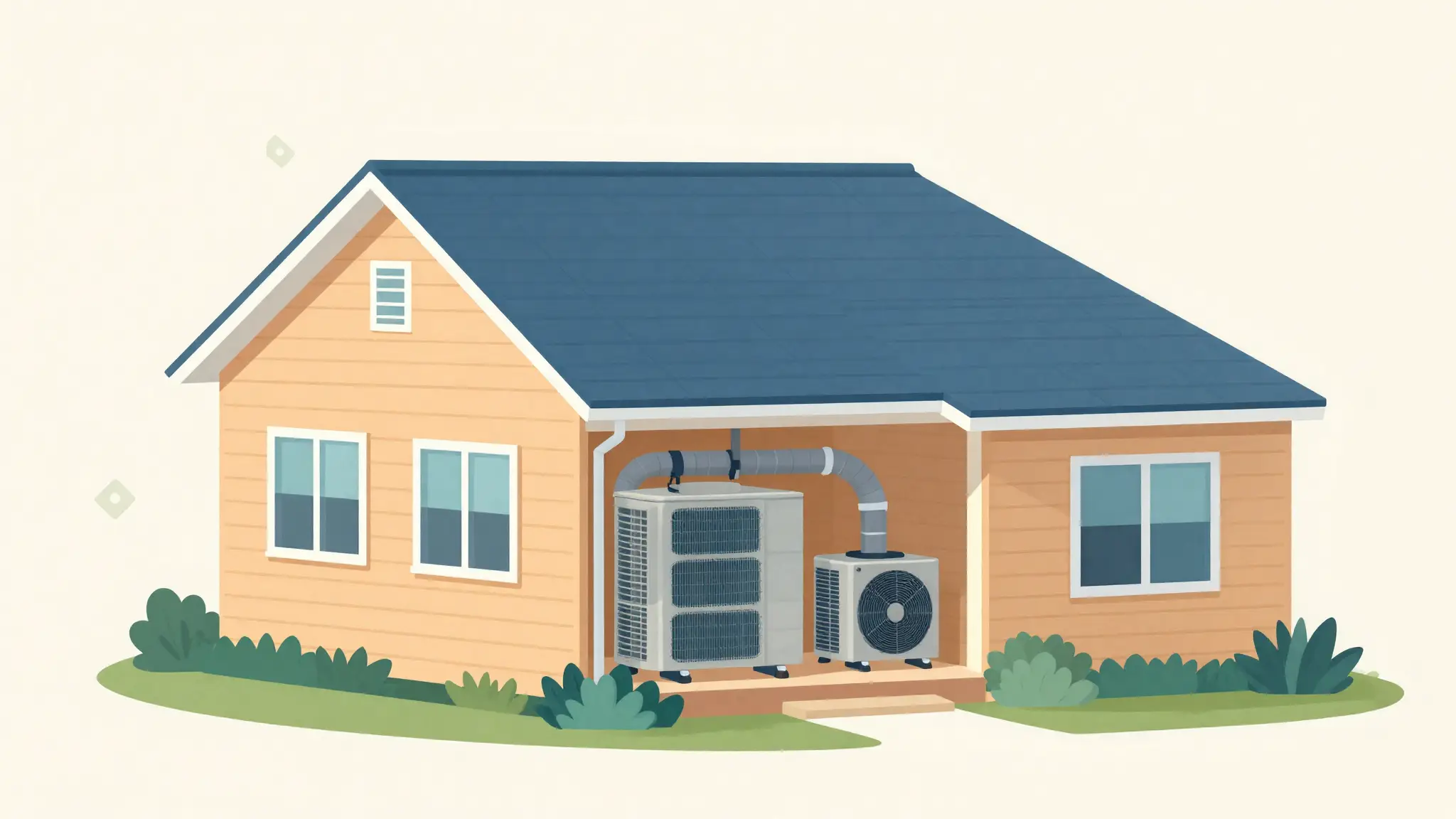
Replacing a full HVAC system costs $5,000 to $12,500 for most U.S. homes in 2026, with a national average of about $7,500, according to Angi. A straightforward change-out that reuses your existing ductwork runs $5,000 to $11,000, while a project that includes new ducts climbs to $7,000 to $16,000, per HomeGuide. Premium high-efficiency equipment in a larger home can exceed $22,000, and CBS News reports complex full replacements reaching $28,000 this year.
This guide is built on current published pricing data from Angi, HomeGuide, This Old House, and Bob Vila, plus the federal refrigerant and tax-credit rules from the EPA and IRS that reshaped HVAC pricing heading into 2026. Last updated: July 2026.
Below, you’ll find costs broken down by system type, home size, and the seven factors that move your quote — plus a line-item budget table you can use to sanity-check contractor bids.
Key Takeaways
- Most homeowners pay $5,000–$12,500 to replace an HVAC system; the national average is roughly $7,500 (Angi).
- A matched central AC + gas furnace replacement runs $7,400–$22,000 installed; a heat pump with air handler runs $7,300–$21,700 (This Old House).
- Ductwork is the biggest hidden cost: full duct replacement averages about $3,500, at $1–$13 per linear foot (Angi).
- HVAC replacement works out to roughly $3–$6 per square foot, so a 2,000-square-foot home typically lands at $6,000–$12,000 (HomeGuide).
- The federal 25C tax credit (30% of cost, up to $2,000 for heat pumps) expired December 31, 2025 — systems installed in 2026 no longer qualify (IRS).
- New A2L refrigerant equipment (R-454B and R-32) is adding roughly 10%–12% to equipment prices compared with the outgoing R-410A models (ACIQ).
In this guide: Cost by system type · Cost by home size · 7 cost factors · Heat pump vs. furnace and AC · Line-item budgets · Repair or replace · Mistakes to avoid · 2025–2026 rule changes · FAQ
Here is the national picture at a glance:
| Cost measure | 2026 figure | Source |
|---|---|---|
| National average (typical replacement) | ~$7,500 | Angi |
| Typical homeowner range | $5,000–$12,500 | Angi |
| Change-out reusing existing ducts | $5,000–$11,000 | HomeGuide |
| Replacement including new ductwork | $7,000–$16,000 | HomeGuide |
| Cost per square foot | $3–$6 | HomeGuide |
| Full observed range (basic to premium/complex) | $5,000–$28,000 | CBS News |
HVAC Replacement Cost by System Type

The type of system you install is the single biggest price driver. A conventional central AC plus gas furnace combination costs $7,400–$22,000 installed, a heat pump with air handler costs $7,300–$21,700, and a multi-zone ductless system runs $12,000–$25,000, according to This Old House. Geothermal sits at the top, at $15,000–$35,000.
| System configuration | Installed cost (2026) | What it includes |
|---|---|---|
| Central AC + gas furnace | $7,400–$22,000 | Outdoor condenser, indoor furnace, coil |
| Heat pump + air handler | $7,300–$21,700 | One outdoor unit that heats and cools |
| Dual fuel (heat pump + gas furnace) | $9,600–$28,700 | Heat pump with gas backup for deep cold |
| Ductless mini-split (multi-zone) | $12,000–$25,000 | Outdoor unit plus 2–5 indoor heads, no ducts |
| Geothermal heat pump | $15,000–$35,000 | Ground loops, heat pump, distribution |
Installed price ranges: This Old House HVAC replacement cost calculator, 2026.
Central AC and Furnace Costs
The classic split system is still the most common U.S. setup. This Old House prices the components at $4,000–$8,000 for central air conditioning and $2,000–$10,000 for the furnace, with fuel type driving the furnace spread: electric furnaces run $2,000–$7,000, gas furnaces $3,800–$10,000, and oil furnaces $6,750–$10,000. As a standalone project, Bob Vila puts typical furnace replacement at $2,800–$6,800, with a national average around $4,743.
Heat Pump System Costs
A standard air-source heat pump unit costs $4,500–$8,000 per This Old House, and Bob Vila reports a national average of $5,947 installed, with a typical range of $4,206–$7,688 for the unit itself. A complete whole-home system with a new air handler lands in the $7,300–$21,700 range. Cold-climate models and variable-speed compressors sit at the upper end.
Ductless Mini-Split Costs
A single-zone ductless mini-split costs $1,500–$4,000 installed, while mini-split heat pumps span $1,300–$8,000 depending on capacity, per This Old House. Whole-home multi-zone systems reach $12,000–$25,000. Mini-splits shine where ductwork doesn’t exist — additions, converted garages, older homes — because you skip the $3,500 average cost of installing ducts entirely.
Geothermal Costs
Geothermal systems cost $15,000–$35,000 installed per This Old House, with excavation or drilling for the ground loop accounting for much of the premium. Operating costs are the lowest of any system type, but with the federal Residential Clean Energy Credit having ended December 31, 2025, the payback math in 2026 depends heavily on state and utility incentives.
HVAC Replacement Cost by Home Size and Capacity
HVAC pricing scales with system capacity, measured in tons of cooling. The rule of thumb is one ton per 400–600 square feet of living space, per HomeGuide, so a 2,000-square-foot house typically needs a 3.5–4 ton system and costs $6,000–$12,000 to re-equip at $3–$6 per square foot.
This Old House publishes installed costs by capacity. We divided each figure by tonnage to show where the pricing sweet spot sits — a calculation the source doesn’t provide:
| System capacity | Typical home size | Avg. installed cost (This Old House) | Cost per ton (our calculation) |
|---|---|---|---|
| 1.5 tons | ~1,000 sq ft | $8,138 | $5,425 |
| 2 tons | ~1,200 sq ft | $8,241 | $4,121 |
| 3 tons | ~1,800 sq ft | $8,344 | $2,781 |
| 4 tons | ~2,500 sq ft | $12,670 | $3,168 |
| 5 tons | ~3,000 sq ft | $17,090 | $3,418 |
Two things stand out. First, small systems are poor value per ton — fixed labor, permits, and electrical work don’t shrink with the equipment. Second, there’s a $4,326 jump (52%) between 3-ton and 4-ton systems, because larger capacities often require bigger ductwork, upgraded electrical service, and two-stage or variable-speed equipment.
That jump is exactly why you should never let a contractor size your system by square footage alone. An oversized unit costs thousands more upfront, then short-cycles — turning on and off rapidly — which wears out components and dehumidifies poorly. Insist on a Manual J load calculation, the industry-standard room-by-room heat gain/loss analysis.
7 HVAC Installation Cost Factors That Move Your Quote
Beyond system type and size, seven variables explain why two neighbors with identical houses can get quotes thousands of dollars apart. Efficiency rating, duct condition, and refrigerant generation are the big three; labor market, brand tier, permits, and electrical work fill out the rest.
1. SEER2 Efficiency Rating
SEER2 (Seasonal Energy Efficiency Ratio 2) measures cooling efficiency under 2023 federal test conditions — higher is more efficient. Expect to pay $350–$1,500 or more for each point of efficiency rating you add, per Angi. Federal minimums set your floor: 13.4 SEER2 in northern states and 14.3 SEER2 in the Southeast and Southwest for systems under 45,000 BTU, while split-system heat pumps must hit 14.3 SEER2 and 7.5 HSPF2 nationwide, per Carrier Enterprise.
2. Ductwork Condition and Replacement
If your ducts leak, are undersized, or contain asbestos-era insulation, budget extra. Duct modifications during an HVAC install run $1,000–$2,700 per This Old House. Full duct replacement costs $1–$13 per linear foot — roughly $3,500 on average — according to Angi’s duct replacement guide. CBS News reports contractors commonly quoting about $3,000 extra when homes need new ducts.
3. Refrigerant Generation (R-410A vs. A2L)
As of January 1, 2025, the EPA’s HFC phasedown banned manufacturing new residential AC and heat pump systems using refrigerants with a global warming potential above 700 — which eliminated R-410A from new production, per the EPA. New systems now use A2L refrigerants (R-454B or R-32), and that equipment carries an average price increase of 10%–12%, according to distributor ACIQ.
4. Labor Market and Region
Labor rates, permit fees, and code requirements vary sharply by metro area — the same system costs more in Seattle or Los Angeles than in the rural Midwest, as Angi’s city-level pricing guides show. A persistent HVAC technician shortage has also pushed labor pricing upward nationally. Always collect at least three local bids rather than relying on national averages alone.
5. Brand and Equipment Tier
Within any system type, builder-grade single-stage equipment can cost thousands less than premium variable-speed lines from the same manufacturer. The installing contractor matters more than the badge: a mid-tier unit installed with a proper load calculation and sealed ducts will outperform a premium unit installed carelessly.
6. Permits, Extras, and Surprises
Angi advises budgeting $250–$3,100 for line items that don’t appear in ballpark figures: permits, smart thermostats, added insulation, zoning dampers, condensate handling, and — in older homes — asbestos removal. Ask every bidder to itemize these rather than burying them in a lump sum.
7. Electrical and Access Upgrades
Switching from gas heating to an all-electric heat pump can require a panel upgrade or new dedicated circuits, and tight attic or crawlspace access adds labor hours. Neither shows up in national averages, so flag them during the site visit, not after the contract is signed.
Heat Pump vs. Furnace and AC: Which Should You Choose in 2026?
For most homes replacing both heating and cooling, the installed price is nearly identical — $7,300–$21,700 for a heat pump system versus $7,400–$22,000 for a central AC and gas furnace, per This Old House — so the decision comes down to fuel prices, climate, and how long you’ll stay. Here’s our side-by-side comparison:
| Criteria | Heat pump + air handler | Central AC + gas furnace | Ductless mini-split (multi-zone) |
|---|---|---|---|
| Installed cost (This Old House) | $7,300–$21,700 | $7,400–$22,000 | $12,000–$25,000 |
| Heating energy source | Electricity | Natural gas, propane, or oil | Electricity |
| Units to maintain | One system, runs year-round | Two systems, seasonal use | One outdoor unit + indoor heads |
| Equipment lifespan (Carrier) | 12–15 years | AC 12–15 yrs; furnace 15–20 yrs | 12–15 years |
| Requires ductwork | Yes | Yes | No |
| Cold-climate performance | Good with cold-climate models; dual-fuel hybrid adds gas backup | Strong in any climate | Good with cold-climate models |
| 2026 federal tax credit | None (25C expired 12/31/2025) | None | None |
| Best for | All-electric homes and owners prioritizing efficiency where electricity is affordable | Cold regions with cheap natural gas and an existing gas line | Homes without ducts, additions, and room-by-room zoning |
A note on lifespan: because a heat pump handles both heating and cooling, it runs many more hours per year than a furnace that rests all summer. Carrier puts AC units and heat pumps at 12–15 years and furnaces at 15–20 years. Factor replacement timing — not just installed price — into a true cost-of-ownership comparison.
The dual-fuel option ($9,600–$28,700) is the practical hedge in cold climates: the heat pump covers mild weather cheaply, and the gas furnace takes over in deep cold. It costs the most upfront but insulates you against swings in either electricity or gas prices.
Real-World Budget: Line-Item HVAC Replacement Scenarios
National averages hide what you actually sign for. We rebuilt three realistic project budgets from component-level prices published by This Old House and Angi — a recalculation you won’t find in either source — so you can see where your quote should fall.
| Line item | A: Basic change-out (reuse ducts) | B: Change-out + duct repairs | C: Full replacement + new ducts |
|---|---|---|---|
| Central AC unit, installed | $4,000–$8,000 | $4,000–$8,000 | $4,000–$8,000 |
| Gas furnace, installed | $3,800–$10,000 | $3,800–$10,000 | $3,800–$10,000 |
| Duct modifications | — | $1,000–$2,700 | — |
| Full duct replacement | — | — | ~$3,500 (avg) |
| Permits, thermostat, extras | $250–$1,000 | $250–$1,500 | $250–$3,100 |
| Estimated project total | $8,050–$19,000 | $9,050–$22,200 | $11,550–$24,600 |
Component prices: This Old House (equipment, duct modifications) and Angi (duct replacement average, permits and extras). Totals are our own sums.
Three takeaways from the math. Scenario A explains why “we’ll reuse your ducts” quotes cluster around $8,000–$12,000 for modest homes with builder-grade equipment. Scenario C shows that new ductwork plus surprise extras can add $3,500–$6,600 — often the entire gap between a lowball phone estimate and the final contract. And in every scenario, the furnace fuel type and AC efficiency tier, not the add-ons, control most of the spread.
Should You Repair or Replace Your HVAC System?
Use the $5,000 rule popularized by This Old House: multiply the repair quote by the system’s age in years — if the result exceeds $5,000, replacement is usually the better investment. A $600 repair on a 12-year-old unit scores $7,200, which argues for replacing.
Age matters because you’re pricing the remaining life. Per Carrier, air conditioners and heat pumps last about 12–15 years and furnaces 15–20 years, so paying for major repairs near those marks buys you very little runway.
Lean toward replacement when:
- Your AC or heat pump is 12+ years old, or your furnace is 15+ years old
- The failed component is a compressor or heat exchanger (the most expensive parts)
- Your system uses R-410A and needs a refrigerant-related repair — the phasedown has made R-410A servicing progressively more expensive as supply tightens
- Energy bills keep climbing despite maintenance
Lean toward repair when the system is under 10 years old, the fix is minor (capacitor, fan motor, board), and the ductwork is sound. Get the repair-versus-replace recommendation from a company that offers both, and be skeptical when a diagnostic visit pivots instantly into a replacement pitch.
5 Expensive HVAC Replacement Mistakes to Avoid
The costliest errors happen before installation day. These are the patterns that consistently separate a fair $10,000 project from a disappointing $16,000 one.
- Accepting sizing by square footage alone. If a bidder quotes tonnage without measuring rooms, windows, and insulation, they’re guessing. Require a Manual J load calculation in writing — oversizing wastes thousands upfront (recall the 52% jump from 3-ton to 4-ton pricing) and causes humidity and short-cycling problems for the system’s whole life.
- Getting one bid. With identical equipment, installation quotes routinely vary by thousands between local companies. Three itemized bids give you both price leverage and a sanity check on scope; the line-item table above tells you what each entry should roughly cost.
- Bolting new equipment onto leaky ducts. Paying $12,000 for a high-efficiency system that pushes air through leaking, undersized ducts throws away the efficiency you bought. Have ducts inspected and priced ($1,000–$2,700 for modifications) as part of the bid, not discovered afterward.
- Overbuying SEER2 without payback math. At $350–$1,500 per point (Angi), jumping from a 14.3 to an 18 SEER2 unit can add several thousand dollars. That premium pays back fastest in hot-climate homes with long cooling seasons — and may never pay back in mild ones, especially with the federal efficiency tax credit gone in 2026.
- Falling for a “refrigerant conversion” pitch. Systems engineered for R-410A cannot simply be recharged with R-454B; the new A2L refrigerants require equipment designed for them, per Lennox. Anyone offering a cheap “conversion” to dodge R-410A costs is a red flag.
Timing is the bonus lever: contractors discount more readily in spring and fall shoulder seasons than during a July heat wave or January cold snap, and you’ll wait days instead of weeks.
2025–2026 Rule Changes That Affect HVAC Prices
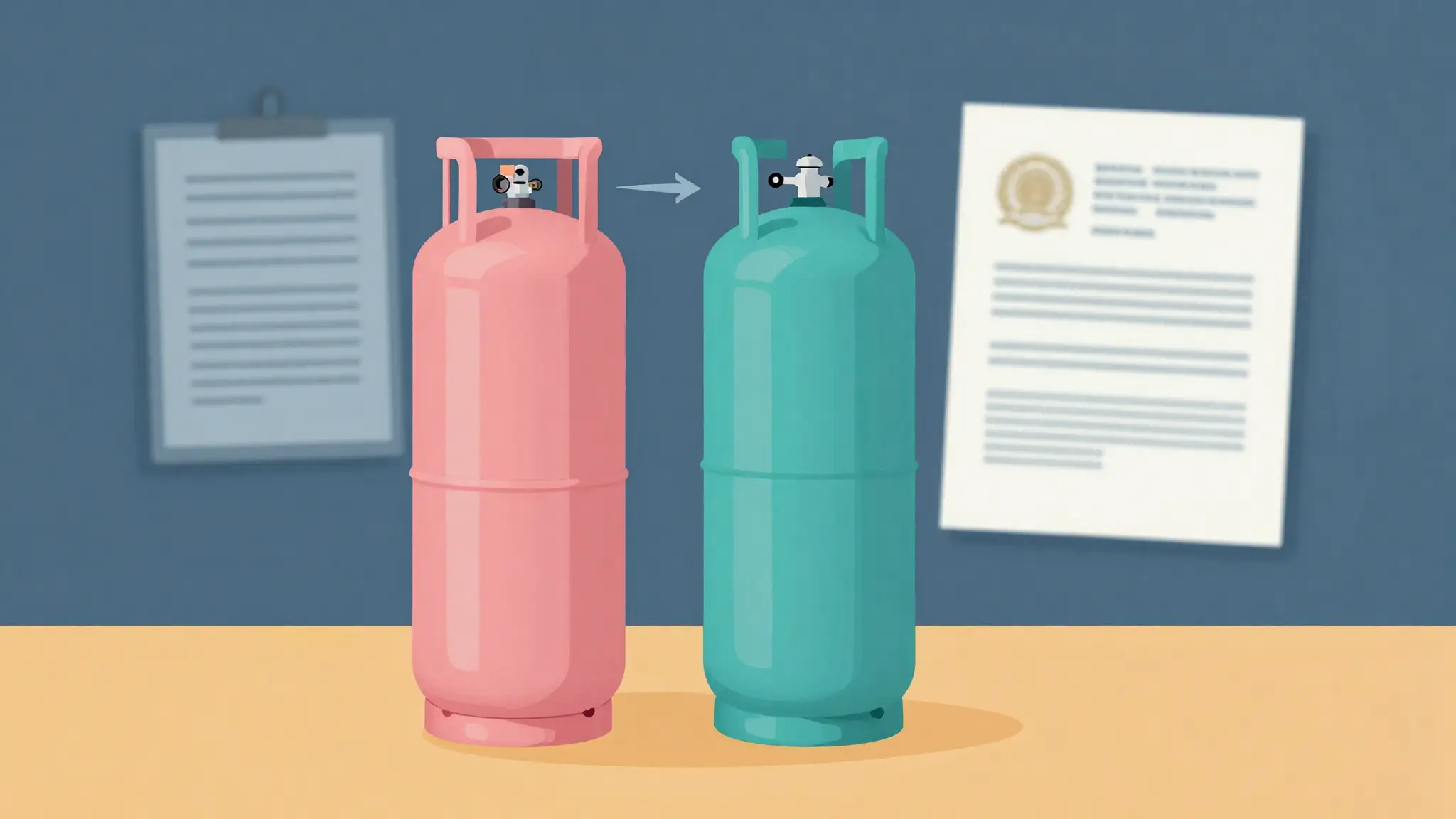
Two federal shifts hit HVAC pricing between 2025 and 2026: the refrigerant transition raised equipment costs, and the expiration of federal energy tax credits removed up to $2,000 in offsets. Together they explain why 2026 quotes look noticeably higher than 2023–2024 figures you may have seen.
The A2L Refrigerant Transition
Under the EPA’s AIM Act phasedown, January 1, 2025 marked the ban on manufacturing residential systems using refrigerants with a global warming potential above 700 — ending R-410A production for new equipment. Contractors could install remaining R-410A inventory through the end of 2025; from 2026, new installations use A2L refrigerants (R-454B or R-32). The new-generation equipment averages 10%–12% higher prices (ACIQ), partly from added safety features like leak-detection sensors.
Federal HVAC Tax Credit Expired for 2026
The Energy Efficient Home Improvement Credit (Section 25C) — worth 30% of project cost up to $2,000 for qualifying heat pumps and up to $600 for qualifying central AC — is no longer available for equipment placed in service after December 31, 2025, per the IRS. If you installed in 2025, you can still claim it on that year’s return. For 2026 installations, look to state programs and utility rebates, which remain active in many areas — ENERGY STAR maintains current federal guidance, and your utility’s website lists local offers.
SEER2 Minimums Still Set the Floor
The 2023 DOE efficiency standards remain in force: 13.4 SEER2 minimum in the North, 14.3 SEER2 in the Southeast and Southwest for most residential AC, and 14.3 SEER2 / 7.5 HSPF2 for split-system heat pumps. You cannot buy a new system below these floors, which is one reason bargain-basement quotes from a few years ago no longer exist.
Frequently Asked Questions
How much does it cost to replace an entire HVAC system?
Most homeowners pay $5,000 to $12,500 to replace an HVAC system, with a national average around $7,500, according to Angi. A full matched system — central AC plus gas furnace — runs $7,400 to $22,000 installed per This Old House, and projects requiring new ductwork or premium equipment can reach $28,000.
Is it cheaper to replace the furnace and AC at the same time?
Usually, yes. Replacing both at once means one crew visit, one permit cycle, and a factory-matched coil and condenser, which avoids the efficiency losses and warranty complications of mismatched components. Since AC units last 12–15 years and furnaces 15–20 per Carrier, systems installed together typically age out within a few years of each other anyway.
How much does a new HVAC system cost for a 2,000-square-foot house?
A 2,000-square-foot home typically costs $6,000 to $12,000 to re-equip, based on HomeGuide’s $3–$6 per square foot benchmark. That size home usually needs a 3.5–4 ton system; This Old House puts the average 4-ton installation at $12,670. New ductwork would add roughly $3,500 to those figures.
How long does an HVAC system last?
Air conditioners and heat pumps last about 12–15 years, while furnaces last 15–20 years, according to Carrier. Regular maintenance — annual tune-ups, timely filter changes, and keeping coils clean — pushes systems toward the upper end, while neglect, coastal air, and oversizing shorten equipment life.
Can I still get a federal tax credit for a new HVAC system in 2026?
No. The Energy Efficient Home Improvement Credit (25C), which covered 30% of cost up to $2,000 for qualifying heat pumps, expired for equipment placed in service after December 31, 2025, per the IRS. Installations completed in 2025 can still be claimed. In 2026, savings come from state programs and utility rebates instead.
Why did HVAC prices go up in 2025 and 2026?
Three forces stacked: the EPA refrigerant transition forced manufacturers to redesign equipment for A2L refrigerants, adding roughly 10%–12% to equipment prices per ACIQ; a persistent technician shortage pushed labor rates up; and the expiration of federal tax credits removed up to $2,000 in offsets that softened net prices in prior years.
What is the cheapest way to replace an HVAC system?
A like-for-like change-out that reuses sound existing ductwork costs $5,000 to $11,000 per HomeGuide — the least expensive full-replacement path. To land at the bottom of that range: get at least three itemized bids, choose standard-efficiency equipment at your region’s SEER2 minimum, schedule during spring or fall, and skip add-ons you don’t need.
Bottom Line
HVAC replacement cost in 2026 centers on $5,000–$12,500 for typical homes, roughly $7,500 on average, with matched full systems spanning $7,400–$22,000 and premium or duct-heavy projects reaching $28,000. Heat pumps and conventional AC-plus-furnace systems now cost nearly the same installed, so choose based on your fuel prices, climate, and holding period rather than sticker price. Three moves protect your budget: demand a Manual J load calculation before anyone quotes tonnage, collect three itemized bids and compare them against the line-item scenarios above, and price your ductwork honestly up front. With federal tax credits gone this year, check your state and utility rebate programs before signing — that’s where the remaining free money lives.
Written by the editorial team. Last updated: July 2026.
This article is for general informational purposes only and is not professional contracting, financial, or tax advice. HVAC prices vary by region, home condition, and market timing; tax and rebate rules change. Confirm current costs with licensed local HVAC contractors and verify incentive eligibility with a qualified tax professional or the administering agency before making decisions.